
Future ADHD Alternatives for Adults in 2026
Table of Contents
- Pharmacological Advancements in ADHD Treatment
- Non-Stimulant Medication Options and Clinical Efficacy
- Best ADHD Planners for 2026: Digital Tools and Templates
- ADHD Task Initiation Hacks: Behavioral Strategies That Work
- Notion Templates for ADHD: Building Your Personalized System
- Complementary and Alternative Approaches: Neurofeedback, Meditation, and Lifestyle Design
- Integration Protocols: Combining Medication, Tools, and Lifestyle for Long-Term Sustainability
- Frequently Asked Questions
Last Updated: September 1, 2026
Pharmacological Advancements in ADHD Treatment
Medication remains foundational to ADHD management for many adults, though the landscape has expanded significantly. Adults respond differently to medication than children, with individual dopaminergic pathways and norepinephrine sensitivity varying widely. This variability has driven development toward personalized care approaches, with clinicians increasingly using biomarkers and patient-reported outcomes to match individuals with the medication most likely to succeed.
The standard of care now includes baseline assessments before treatment, regular monitoring, and willingness to adjust or discontinue if ineffective. Adults particularly benefit from this flexibility due to complex medical histories and concurrent conditions that influence pharmacological choices.
Non-Stimulant Medication Options and Clinical Efficacy
Non-stimulant medications represent a significant frontier, particularly for adults experiencing stimulant side effects or contraindications like cardiovascular concerns. Atomoxetine, guanfacine, and clonidine target norepinephrine reuptake and alpha-2 adrenergic pathways rather than dopamine directly.
Clinical evidence for non-stimulants has strengthened considerably. Adults with anxiety comorbidity, substance use history, or sleep disturbances often tolerate non-stimulants better due to lower abuse potential and minimal sleep interference. The key difference: they typically take 4-6 weeks to reach full efficacy, compared to 1-2 weeks for stimulants (peer-reviewed research). Side effects differ too, weight changes, sexual dysfunction, and appetite suppression are less common, though sedation and blood pressure changes require monitoring.
Guanfacine and clonidine, originally developed as blood pressure medications, show particular promise in reducing impulsivity and hyperactivity. For adults managing both ADHD and hypertension, these represent a rare opportunity for a single medication to address multiple conditions, though careful titration and regular blood pressure monitoring are essential.
Best ADHD Planners for 2026: Digital Tools and Templates
Digital tools have become essential ADHD alternatives because they address the core challenge: execution gaps between intention and action. The best ADHD planners share common design principles: low visual clutter, flexible systems that don't punish missed days, and task initiation support rather than just completion tracking.
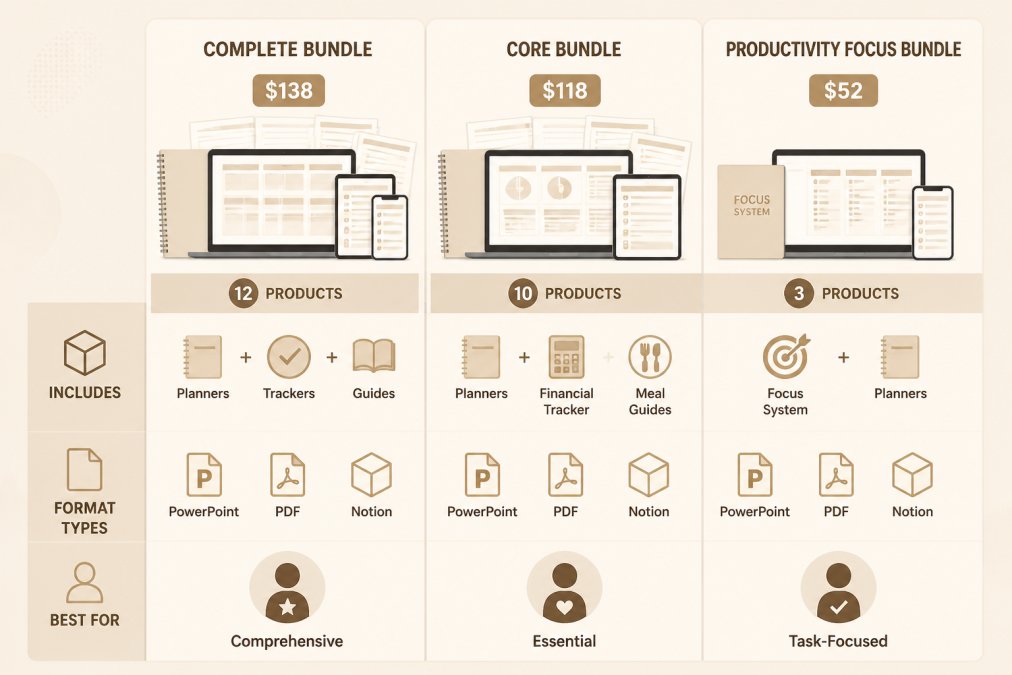
Anchor Grove Studio offers planning solutions designed specifically for ADHD neurology. The Complete ADHD Product Bundle includes all 12 tools for $138, covering planning, financial tracking, meal planning, and sleep management. The Core ADHD Product Bundle ($118) combines essential tools: planners, trackers, Notion templates, and meal planning guides. The ADHD Productivity Focus Bundle ($52) targets task initiation with a focus system designed for the moment between knowing what needs doing and actually starting.
What separates effective ADHD planners from generic productivity tools is understanding executive function challenges. Task initiation, the ability to begin a task, is often harder than task completion for adults with ADHD. ADHD-specific tools help by breaking tasks smaller, identifying realistic work sessions, and managing distractions that derail momentum.
Notion templates have become increasingly popular for customization without coding. The ADHD Life Dashboard Notion Template ($26) integrates brain dumps, meal planning, and shopping lists into a single dashboard with toggle-based layouts, reducing cognitive load by showing only what you're actively working on.
ADHD Task Initiation Hacks: Behavioral Strategies That Work
Task initiation hacks represent practical alternatives to medication for adults struggling with the gap between intention and action. They work by bypassing the broken motivation system and creating external structure that compensates for internal dysregulation.
The two-minute floor is highly effective: commit to working for only two minutes. Most adults with ADHD can start something for two minutes, and momentum often carries them forward. The key is removing pressure to commit to a full session.
Body doubling, working alongside someone else, even virtually, changes the neurochemistry of task initiation for many adults. The presence of another person creates accountability and external structure. The ADHD Focus & Deep Work System ($16) from Anchor Grove Studio includes specific body doubling protocols and distraction triage strategies.

Temptation bundling pairs difficult tasks with something enjoyable: working on finances while listening to a favorite podcast, or organizing while a specific playlist runs. Breaking tasks into absurdly small steps also changes cognitive load, instead of "organize the garage," steps become: move boxes from left wall, sort boxes into keep/donate/trash, wipe down shelves.
Environment design matters more than willpower. Removing friction from desired behavior and adding friction to distractions makes starting easier: phone in another room, email closed, notifications off.
Notion Templates for ADHD: Building Your Personalized System
Notion templates represent a significant shift in how adults with ADHD approach organization. Unlike rigid systems, Notion templates can be customized to match how your brain actually works. The best templates start with interlinked databases that talk to each other, a meal planning template connects recipes to ingredients to shopping lists, so adding a recipe automatically populates your shopping list.
What makes Notion work for ADHD is the toggle-based layout. Instead of seeing everything at once, which creates visual overwhelm, you see only what you're actively using. The ADHD Life Dashboard Notion Template includes six interlinked databases: Brain Dump, Journal, Recipes, Ingredients, Meal Plan, and Shopping List.

Quick-capture is essential for ADHD systems. Notion allows mobile quick-capture widget setup, meaning you can add to your brain dump from your phone in seconds. Treat templates as living systems, not static documents. Review weekly what's working and adjust categories, hide unused sections, and add new databases as needs evolve.
Complementary and Alternative Approaches: Neurofeedback, Meditation, and Lifestyle Design
Complementary approaches have moved beyond fringe territory into mainstream clinical consideration. While not replacements for medication or behavioral strategies, neurofeedback, mindfulness-based interventions, and lifestyle modifications show measurable effects on executive function.
Neurofeedback trains the brain to self-regulate by providing real-time feedback on brainwave patterns. Adults with ADHD typically show excess theta waves (associated with mind-wandering) and insufficient beta waves (associated with focused attention) (peer-reviewed research). Research shows improvements in attention and impulse control, though results vary significantly.
Mindfulness-based interventions, particularly meditation focused on present-moment awareness, help adults manage racing thoughts and emotional dysregulation. A consistent 10-minute daily practice shows measurable improvements in attention span and emotional regulation (peer-reviewed research).
Sleep quality dramatically affects executive function, poor sleep makes ADHD symptoms worse. Consistent sleep schedules and sleep hygiene practices often produce noticeable improvement. The ADHD Guide to Sleep & Bedtime ($12) from Anchor Grove Studio provides specific strategies for managing racing thoughts and bedtime procrastination.
Exercise, particularly aerobic activity, increases dopamine and norepinephrine availability, directly supporting attention and impulse control. Thirty minutes of movement produces clearer thinking and better focus for hours afterward. Nutritional approaches focus on supporting stable blood sugar and providing micronutrients involved in neurotransmitter synthesis, protein-rich meals, complex carbohydrates, and micronutrients like iron, zinc, and B vitamins support dopamine production.
Integration Protocols: Combining Medication, Tools, and Lifestyle for Long-Term Sustainability
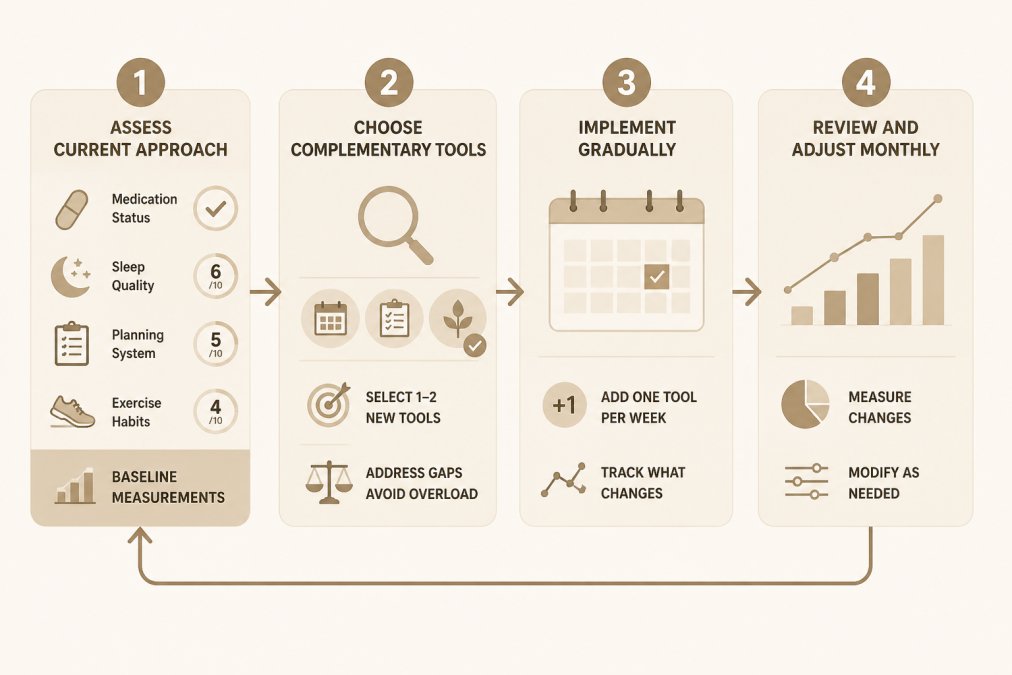
The future of ADHD alternatives lies in integrating multiple strategies into a sustainable system. Medication, digital tools, behavioral strategies, and lifestyle modifications work synergistically. An effective integration protocol starts with honest assessment: What's working and what's breaking down?
The integration protocol proceeds in phases. Phase one stabilizes medication if needed, typically taking 6-12 weeks. Phase two adds behavioral tools and planning systems, adding one tool per week to assess what actually helps. Phase three addresses lifestyle foundations: sleep, exercise, and nutrition.
Anchor Grove Studio's complete bundles support integration by providing coordinated tools. The Complete ADHD Product Bundle ($138) includes medication tracking support, sleep management, meal planning, and task initiation support in one coherent system.

Long-term sustainability requires built-in flexibility. Life changes, stress increases, energy fluctuates. The best ADHD tools allow you to pause, adjust, and resume without shame. Cost-benefit analysis reveals that integrated approaches often cost less long-term than medication alone, as the functional improvement reduces indirect costs of ADHD.
The landscape of ADHD alternatives for adults continues evolving as research clarifies how different interventions work together. Medication remains important, but it's increasingly understood as one component of a broader ecosystem. Digital tools, behavioral strategies, and lifestyle modifications address executive function challenges that medication alone doesn't solve. The most effective approach integrates multiple strategies tailored to individual neurochemistry, circumstances, and preferences.
Anchor Grove Studio's collection of ADHD-friendly tools supports this integrated approach. Rather than forcing your brain into rigid productivity systems, these tools work with how ADHD brains actually function. Start where you are, add one element at a time, and build a system that works for your specific brain and life. That system will likely need adjustment as circumstances change, that's not failure, it's adaptation.
Frequently Asked Questions
What are the most promising non-pharmacological ADHD alternatives for adults?
Non-pharmacological approaches include neurofeedback, cognitive training, mindfulness-based interventions, and behavioral therapy. Research supports executive function improvements through structured digital planning tools, lifestyle modifications addressing sleep and nutrition, and mind-body practices. Many adults find success combining these approaches with medication or using them as primary strategies when pharmacotherapy isn't suitable or tolerated.
How can ADHD-friendly digital planners and Notion templates improve task initiation?
ADHD-friendly templates reduce cognitive load by breaking tasks into smaller steps and removing visual clutter. Notion templates for ADHD allow customization without rigid structures, making them adaptable to fluctuating energy levels. Systems like the ADHD Focus & Deep Work System ($16) specifically target the gap between knowing what to do and actually starting, using techniques like body doubling prompts and distraction triage to support task initiation.
What role does the gut-brain axis play in ADHD management for adults?
Emerging research suggests the gut-brain axis influences dopaminergic and norepinephrine pathways relevant to ADHD symptom management. Dietary interventions, particularly reducing processed foods and supporting stable blood sugar, may improve focus and executive function. Nutritional approaches work alongside pharmacotherapy or as standalone strategies, with personalized care increasingly recognizing how nutrition affects neurotransmitter production and symptom severity.
Why might traditional ADHD medication stop working, and what alternatives exist?
Medication tolerance can develop due to neuroadaptation, changes in metabolism, or life circumstances affecting symptom presentation. Alternatives include adjusting dosage, switching to different pharmacological classes (such as non-stimulants like guanfacine or atomoxetine), or combining medication with behavioral interventions. Digital therapeutics, structured planning systems, and lifestyle modifications address executive function directly and can reduce reliance on medication alone for symptom management.
What makes ADHD planners and organizational tools actually stick when others haven't?
Tools designed specifically for ADHD brains succeed when they eliminate shame, allow flexibility, and support task initiation without rigid streaks. Anchor Grove Studio's complete bundle ($138) includes multiple formats (printable, digital, Notion) so you can start over on any page without guilt. The key difference is systems built on how ADHD brains actually work, with decision fatigue, energy fluctuations, and executive function challenges, rather than generic productivity frameworks.
This article was written using GrandRanker