
Flexible Meal Planning for ADHD: A 2026 Guide
Table of Contents
- Why Rigid Meal Plans Fail with ADHD
- How to Meal Plan with ADHD: The Flexible Framework
- 15 ADHD Meal Prep Ideas That Don't Require Hours in the Kitchen
- ADHD Meal Planning Tools: From Templates to Apps
- What to Do When You're Stuck: No-Decision Meals
- Budget-Friendly Strategies for Neurodivergent Kitchens
- Plan for the Mess: Post-Cooking Cleanup
- Your Flexible Meal Planning Blueprint
- Frequently Asked Questions
Last Updated: September 7, 2026
Why Rigid Meal Plans Fail with ADHD
Flexible meal planning for ADHD starts with accepting a hard truth: traditional meal plans are built for neurotypical executive function. They assume you can follow a linear list, remember to thaw the chicken, and feel motivated by a color-coded chart on Sunday. For someone with ADHD, those systems collapse under the weight of cognitive overload, time blindness, and the sheer boredom of repetition.

The problem isn't you. It's the plan. Executive dysfunction means tasks that require multiple steps, working memory, and delayed rewards are genuinely harder to initiate (nimh.nih.gov). A rigid plan demands all three at once. When you inevitably miss a day, the shame spiral begins, and the plan gets abandoned entirely.
What actually works is a flexible structure: a framework with guardrails, not a cage. This guide from Anchor Grove Studio walks through a low-barrier system designed to work with your brain, not against it. We'll show you how to build a meal rotation, set up visual cues, and create no-decision fallbacks for the days when even choosing a snack feels exhausting.
How to Meal Plan with ADHD: The Flexible Framework
The most effective approach to meal planning for ADHD is to design for your worst day, not your best one. A system that only works when you're well-rested and motivated isn't a system, it's a hope. The framework below prioritizes flexibility, reduces decision fatigue, and removes the guilt when life happens.
Step 1: Build a 'Top 10' Meal Rotation
Your rotation is a list of 10 meals you already know how to make and actually enjoy. No new recipes, no Pinterest deep dives. Write them down once and refer back to them every single week.
The magic is in the constraint. When you're staring down the kitchen at 6 PM, your executive function is depleted (apa.org). Having a pre-approved list eliminates the open-ended question "What's for dinner?" and replaces it with a simple choice from a known set. This directly reduces cognitive overload and impulse buying at the grocery store, since your shopping list is just the ingredients for your rotation.
Step 2: Create a Visual Planning System
Visual systems are a cornerstone of ADHD-friendly organization. A meal plan you can see without opening an app or flipping pages is one you'll actually use.
Try a whiteboard on the fridge, a magnetic menu pad, or a digital tablet planner. The key is that it lives where you make decisions. Anchor Grove Studio's digital planners, like the Digital ADHD Planner (GoodNotes/Tablet-Ready), offer low-clutter layouts for exactly this purpose. The act of physically checking off a meal provides a small dopamine hit that reinforces the routine (peer-reviewed research).

Step 3: Set Up a Low-Barrier Shopping Workflow
Grocery shopping is a marathon of decisions, sensory input, and impulse triggers. Lower the barrier by making it as automatic as possible.
- Use the same grocery delivery app every week, and save your rotation's ingredients as a recurring list.
- Order groceries for pickup or delivery to bypass the sensory overload of the store.
- If you shop in person, go with a list sorted by store aisle, not by meal.
This workflow reduces the friction between planning and eating. When the food is in your house, the hardest part is already done. For a deeper structure, the ADHD Guide to Meal Planning No-Decision Meals ebook from Anchor Grove Studio explains the Repeat Rotation method in detail, a system built specifically to combat decision fatigue.
15 ADHD Meal Prep Ideas That Don't Require Hours in the Kitchen
Meal prep doesn't have to mean a Sunday afternoon of batch cooking with 12 containers of identical chicken and rice. The goal is food prep efficiency, not culinary perfection. These ideas are designed to be flexible, snack-based, and forgiving.
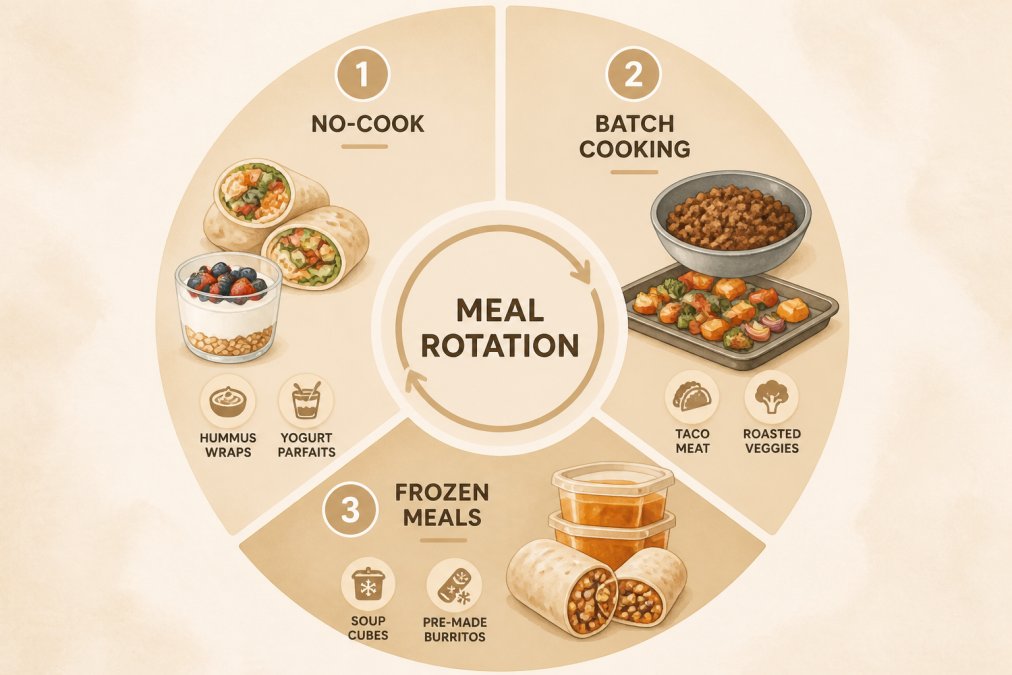
- Sheet-pan proteins: Roast a tray of chicken thighs or sausages. Eat them for 2-3 meals, then freeze the rest.
- Grazing boards: Arrange cheese, crackers, fruit, and veggies on a plate. No cooking required.
- The 'fridge clean-out' bowl: Combine leftover grains, proteins, and veggies with a sauce. It's a meal, not a science experiment.
- Overnight oats: Mix oats, milk, and toppings in a jar. Done in 5 minutes, ready in the morning.
- Hard-boiled egg stash: Boil 6-8 eggs once. They become instant protein for salads, snacks, or breakfast.
- Freezer burritos: Wrap up beans, rice, and cheese. Microwave for 2 minutes on a low-energy day.
- Rotisserie chicken: Buy one pre-cooked. Shred it for sandwiches, salads, or tacos.
- Pasta with jarred sauce: Add a bag of frozen spinach or a can of lentils for extra nutrition.
- Smoothie freezer packs: Pre-portion fruit and greens into bags. Just add liquid and blend.
- Quesadillas: Cheese and a tortilla in a pan. A 5-minute meal that feels like comfort food.
- Tuna or chicken salad: Mix with mayo and eat with crackers or lettuce wraps. No heat required.
- Pre-washed salad kits: Buy them. Use them. The convenience is worth the cost.
- Soup from a can: Add leftover rice or a dollop of yogurt to make it feel more substantial.
- Rice cooker meals: Throw in rice, protein, and seasoning. Walk away until it beeps.
- The 'no-thought' sandwich: Keep good bread, deli meat, and cheese on hand. It's a classic for a reason.
ADHD Meal Planning Tools: From Templates to Apps
The best ADHD meal planning tools are the ones you'll actually remember to open. For some, that's a physical whiteboard. For others, it's a Notion template or a tablet planner that syncs across devices. The tool must fit your life, not the other way around.
Many people find that digital tools offer the flexibility to start over without the visual shame of a half-filled paper page. Anchor Grove Studio's Core ADHD Product Bundle includes a meal planner alongside other life-management templates, all designed to be forgiving. If you miss a week, you just turn the page or open a new template. There are no streaks to break, which is crucial for long-term sustainability.
What to Do When You're Stuck: No-Decision Meals
Everyone has days when executive function is at zero. On those days, you need a list of no-cook options and snack-based meals that require zero decisions. This is your emergency fallback, and it should be written down somewhere visible.
A no-decision meal is one you can assemble without thinking. Think peanut butter on toast, a bowl of cereal, or a cheese stick and an apple. The nutritional ideal takes a back seat to the immediate need of eating something. The Anchor Grove Studio guide on no-decision meals is built around this exact principle, offering a structured list so you don't have to improvise when your brain is offline.
Budget-Friendly Strategies for Neurodivergent Kitchens
Meal planning for ADHD often gets framed as a way to save money, but the upfront cost of stocking a pantry can feel like a barrier. The fix is to build a list of cheap, shelf-stable pantry staples that you buy once and keep on hand.
Beans, rice, pasta, canned tomatoes, and frozen vegetables form the backbone of low-cost, low-effort meals. When you have these basics, a fresh protein or vegetable can be added on a whim without a full grocery trip. This reduces food waste, because you're buying for your rotation, not for a fantasy version of yourself who loves to cook elaborate meals. The Guides & Ebooks Bundle from Anchor Grove Studio addresses dietary restrictions and everyday living challenges, helping you build a system that respects both your budget and your brain.

Plan for the Mess: Post-Cooking Cleanup
The meal isn't over when you finish eating. For many ADHDers, the pile of dishes, the greasy stovetop, and the leftover containers are the real barrier to cooking again tomorrow. The cleanup phase is where motivation dies. A realistic plan treats cleanup as part of the cooking process, not a separate chore to face after dinner.
The "Cook-Once, Clean-While-You-Cook" Method
Set a recurring timer on your phone or smart speaker for 5 minutes when you start cooking. When it goes off, do one small cleanup task: load the dishwasher, wipe the counter, put away the spice jar you just used. This "micro-cleaning" prevents the mess from accumulating into an overwhelming mountain. The timer creates an external cue that doesn't rely on your internal sense of time passing.
The "One-Pot, One-Pan, One-Bowl" Rule
Design your meal rotation around recipes that use a single cooking vessel. Sheet-pan dinners, one-pot pastas, and rice cooker meals all minimize the number of dirty items. If you're shopping for new cookware, prioritize a large cast-iron skillet or a Dutch oven that can go from stovetop to oven, fewer pans means fewer things to wash.
The "Immediate-Soak" Protocol
The single most effective ADHD cleanup hack is to fill dirty pots and pans with hot water and a drop of dish soap immediately after serving. This takes 10 seconds and prevents baked-on food from hardening. When you finally get to the dishes, whether that's 30 minutes or 3 hours later, the soak has done the hard work. For nonstick pans, use warm water and let them cool slightly before soaking to avoid warping.
The "Closing Shift" Routine
Borrow the restaurant concept of a closing shift. Before you leave the kitchen for the night, do a 5-minute sweep:
- Load the dishwasher with everything that fits.
- Hand-wash the one or two items you need for breakfast tomorrow (a coffee mug, a bowl, a spoon).
- Wipe the counters with a single disinfecting wipe.
- Take out the trash if it's full or smells.
This routine is non-negotiable but time-boxed. The goal isn't a spotless kitchen, it's a kitchen that doesn't feel hostile when you walk in tomorrow morning. A common pattern among ADHDers who maintain cooking habits is that they never leave a dirty pan overnight. The visual of a clean sink is a powerful cue to cook again.
The "Dish Rack Within Reach" Setup
Keep a small dish rack or drying mat next to the sink for the items you use daily: a chef's knife, a cutting board, a spatula, a coffee mug. If these essentials are clean and within arm's reach, the barrier to starting a meal drops significantly. Avoid the trap of storing everyday tools in a drawer or cabinet that requires extra steps to access.
Your Flexible Meal Planning Blueprint
Building a sustainable food routine with ADHD is less about perfect execution and more about designing a system that forgives you. Start with a short list of meals you like. Set up a visual cue you can't ignore. Automate the shopping as much as possible. And always have a no-decision fallback ready for the hard days.
The core insight is that flexibility is a feature, not a flaw. When you remove the shame of falling behind, you remove the biggest obstacle to getting started again. Anchor Grove Studio offers a range of ADHD-friendly planners and templates, from printable pages to Notion systems, all built to help you start over on any given day without the weight of a broken streak.
Get started with Anchor Grove Studio and build a flexible meal planning system that works with your brain, one low-barrier step at a time.
Frequently Asked Questions
What is the 1/3/5 rule for ADHD meal planning?
The 1/3/5 rule is a flexible framework to reduce decision fatigue. It involves choosing 1 big task, 3 medium tasks, and 5 small tasks for the day. Applied to meal planning, this might look like deciding on 1 meal to cook fresh, 3 meals to assemble from prepped ingredients, and 5 snack-based meals. This structure respects your executive function limits while ensuring you have a plan for the week.
What are the best ADHD meal planning tools for beginners?
For beginners, the best tools are visual and low-barrier. Start with a simple whiteboard or a printed template you can fill out with dry-erase markers. Digital options include a dedicated planner like the Digital ADHD Planner for GoodNotes or a Notion template. The goal is to find a system that allows for easy changes and doesn't create extra cognitive load.
How do I handle decision fatigue when choosing what to eat?
Reduce choices by limiting your options. Create a 'Top 10' list of meals you genuinely enjoy and rotate them. Keep a visual list of these meals on your fridge to remove the need to brainstorm. For days when even that feels hard, have a backup of 'no-decision meals' like a frozen dinner or a bowl of cereal that requires zero thought.
How can I maintain a flexible meal plan without wasting food?
Plan for flexibility by using ingredients that can be used in multiple ways. For example, buy a whole chicken and plan for roast chicken, then chicken tacos, then chicken soup. Keep a 'use me first' shelf in your fridge for items that need to be eaten soon. This approach gives you structure without locking you into a rigid schedule that leads to spoiled food.