
How to Stop Abandoning Planners: A 6-Step Guide
Table of Contents
- Why You Keep Abandoning Planners
- Recognize Planner Overwhelm Symptoms Before They Derail You
- Step 1: Start with a Minimal System, Not a Perfect One
- Step 2: Choose the Right Format for Your Brain
- Step 3: Build a Planning Habit Without the Pressure
- Step 4: Plan for Off Days and Energy Fluctuations
- Step 5: Use a Brain Dump and Triage System
- Step 6: Reset Without Guilt After Abandonment
Last Updated: August 29, 2026
Why You Keep Abandoning Planners
The reason you've abandoned planners isn't because you lack discipline. It's because traditional planning systems weren't designed for how your brain actually works. Most planners follow a rigid formula: endless categories, complex structures, and the assumption you'll maintain perfect consistency. They're built on a neurotypical model that assumes linear thinking and sustained focus. If your brain doesn't work that way, the planner becomes a source of shame rather than support.
The trap of overplanning and system complexity
Overplanning is one of the most common reasons planners get abandoned. You create a system so detailed that maintaining it becomes a second job. You add categories for every area of life, color-coding schemes, habit trackers, and accountability checkpoints. The system feels powerful at first, until it demands more energy than you actually have.
Executive dysfunction makes this trap deeper. When you struggle with task initiation, opening your planner and deciding what to prioritize feels overwhelming. A complex system with too many options paralyzes you before you begin. Every additional feature drains your mental energy, turning the planner into a barrier rather than a tool.
Perfectionism and the shame cycle
Perfectionism fuels planner abandonment more than any other factor. You create a perfect system on day one, miss a single day, and suddenly the entire thing feels ruined. That missed day triggers shame. Shame triggers avoidance. Avoidance turns into abandonment.
This shame cycle is specific to people with executive dysfunction. When you already struggle with consistency, adding perfectionism creates an impossible standard. The real problem is that most planning advice treats abandonment as a personal failure. Abandonment isn't a character flaw, it's feedback that your system doesn't match your brain.
Executive dysfunction and task initiation
Executive dysfunction makes the gap between knowing what needs to be done and actually starting it feel impossibly wide (peer-reviewed research). A planner can either bridge that gap or widen it. Most planners assume you know how to start; they just help you track what you've done. But if you struggle with task initiation, you need a system that helps you break the paralysis and make starting smaller and less intimidating.
Recognize Planner Overwhelm Symptoms Before They Derail You
Planner overwhelm builds quietly. Learning to recognize the symptoms early gives you a chance to reset before the guilt cycle takes over.
The first sign is avoidance. You stop opening your planner because it triggers dread. The second sign is decision paralysis. When you do open it, you freeze, too many options, too many places to put information. The third sign is the perfectionism trap: you missed a day and shame makes you want to hide the planner away.
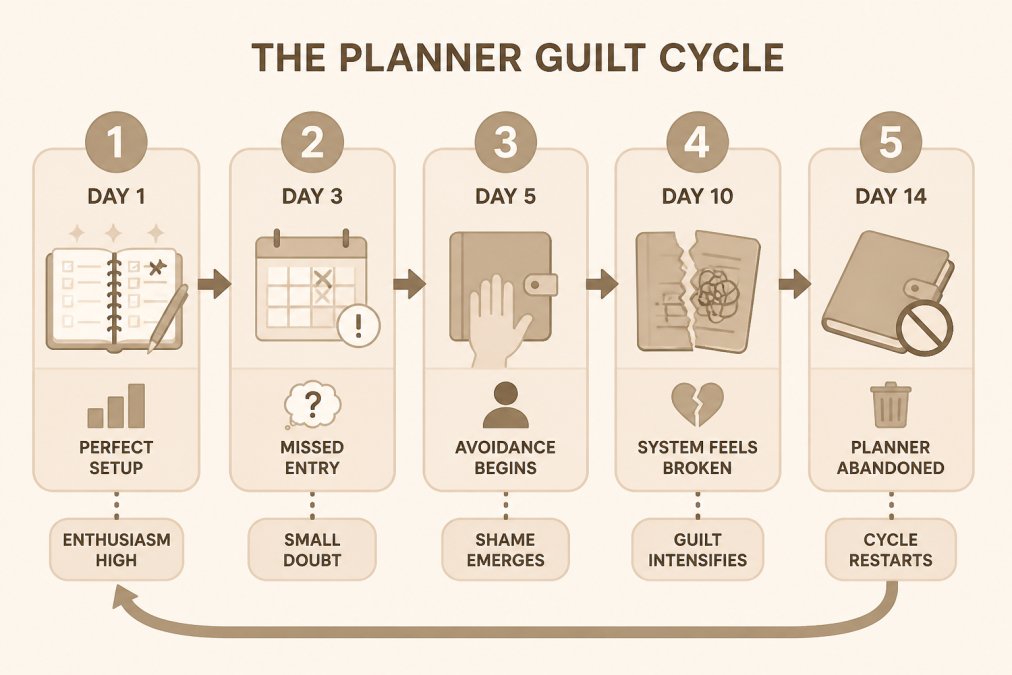
The fourth sign is system complexity creeping in. You keep adding features to fix problems, creating a system so complex that using it requires executive function you don't have on difficult days. The final sign is energy fluctuation mismatch: your planner assumes consistent energy, but your actual life includes days when you're barely functioning.
Recognizing these symptoms early is the difference between a temporary pause and permanent abandonment.
Step 1: Start with a Minimal System, Not a Perfect One
The single most important decision is choosing simplicity over comprehensiveness. A minimal system you actually use beats a perfect system you abandon.
Start with three core elements: a place to dump tasks without organizing them, a way to choose what matters today, and a way to reset after an off day. Everything else is optional. Build the bare minimum, use it for two weeks, and only add something if you genuinely miss it.
A minimal system might look like this: a single weekly view, a daily section for today's priorities, and a brain dump space for everything else. No color coding. No elaborate categories. No habit tracking unless you're specifically working on building a single habit.
Start with the Anchor Grove Studio 1-Month Printable ADHD Planner Trial ($5.00) to test whether a minimal approach works for you.

Step 2: Choose the Right Format for Your Brain
Not everyone's brain processes planning the same way. The wrong format adds friction to an already difficult process. Choose the format that feels least like work.
Digital planners offer speed, searchability, and automatic reminders. Analog planners offer tactile feedback and fewer distractions. The best format is the one you'll actually use. If digital reminders help you stay consistent, choose digital. If handwriting helps you think more clearly, choose analog.
Many people with ADHD find that a hybrid approach works best: use a digital tool for reminders and task management, but keep a physical planner for weekly review and intentional planning. Anchor Grove Studio offers both printable and digital formats because different brains work differently. The Printable ADHD Planner ($22.00) works for people who need the tactile experience of paper. The Digital ADHD Planner works for people who need accessibility and automatic reminders.

Step 3: Build a Planning Habit Without the Pressure
A planning habit isn't something you force through willpower. It's something you build through repetition, low stakes, and genuine usefulness.
Start with a single touchpoint: a five-minute daily check-in where you look at today and choose three things that matter. After this feels automatic (usually two to three weeks), add a weekly review (the NIH). Spend ten minutes on Sunday looking at the week ahead and thinking about what's realistic.
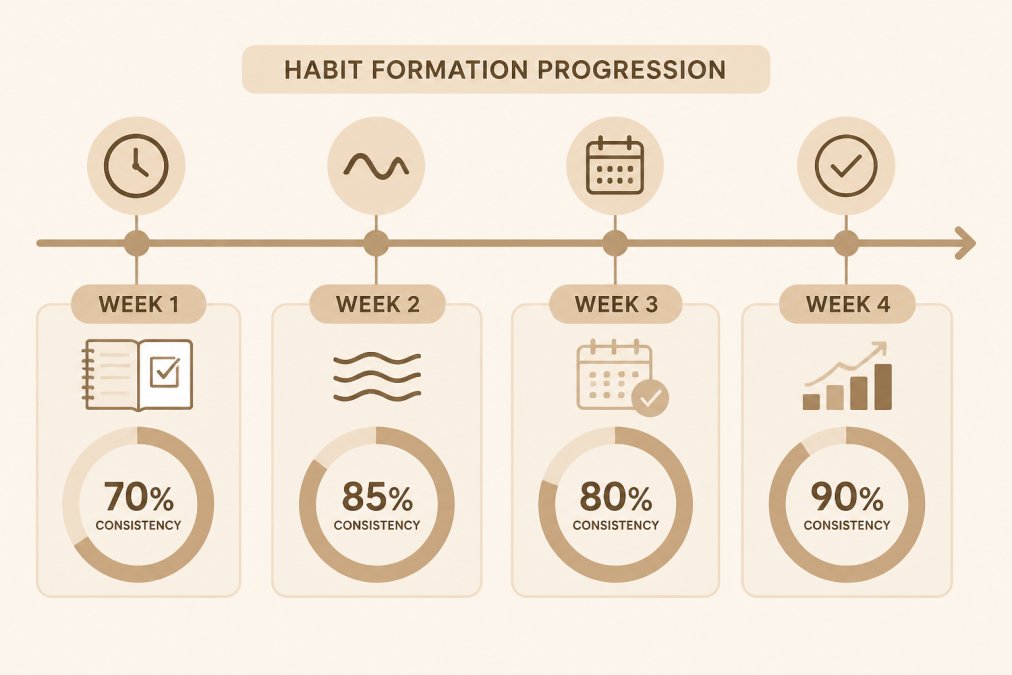
Consistency matters more than duration. A five-minute daily habit you maintain for a month is more powerful than a 30-minute habit you maintain for a week. Each time you complete your daily check-in, you build evidence that you can follow through, counteracting the shame cycle from abandonment.
Set your daily check-in at the same time every day. Your brain learns to expect planning at that moment, which reduces friction. Use the Anchor Grove Studio ADHD Focus & Deep Work System ($16.00) if task initiation is your specific challenge.

Step 4: Plan for Off Days and Energy Fluctuations
Most planners assume consistent energy and focus. Your actual life includes days when you're barely functioning. A planning system that only works on your best days isn't a system, it's a source of shame on your worst days.
One practical approach is the "scaled check-in." On good days, do your full planning routine. On medium days, do a simplified version with just today's three priorities. On low-energy days, do a one-minute check: what's the one thing that matters today? This scaling prevents the all-or-nothing thinking that leads to abandonment.
Your planner should support you on your worst days, not just your best days.
Step 5: Use a Brain Dump and Triage System
Executive dysfunction often means you can't distinguish between urgent, important, and optional tasks. Everything feels equally pressing, which creates paralysis. A brain dump and triage system solves this by separating capturing ideas from organizing them.
A brain dump is exactly what it sounds like: you write down everything in your head without organizing or prioritizing. The goal is to get it out of your head so you can think clearly.
After your brain dump, you triage. Look at everything you wrote and ask: what actually needs to happen? What can wait? Most brain dumps contain noise, worries that aren't actionable, ideas that aren't relevant. Triage reduces your brain dump from 20 items to three to five actual priorities.
The Anchor Grove Studio Printable ADHD Planner ($22.00) includes a dedicated Brain Dump & Triage section. You dump everything, then choose what matters. This structure prevents the overwhelm that leads to abandonment.
Step 6: Reset Without Guilt After Abandonment
You will abandon your planner at some point. The difference between a system that sticks and one that doesn't is what happens after abandonment.
Most people experience abandonment as failure. A better approach is to treat abandonment as a reset point, not a failure point. You stopped using your planner. That's data. Now you adjust.
The reset process is simple: you don't start over from day one. You simply open your planner and continue. Today is a new day. Your planner works whenever you use it, not just when you use it perfectly.
People who treat setbacks with self-compassion rather than shame are significantly more likely to resume habits after a break (peer-reviewed research). Shame creates avoidance. Self-compassion creates return.
The practical reset looks like this: you abandoned your planner three weeks ago. You open it today without judgment. You don't create a new system. You just write down what matters today and move forward.
The reason you've abandoned planners in the past isn't because you lack discipline. It's because those systems weren't designed for how your brain actually works. A planning system that works with your executive dysfunction, adapts to your energy fluctuations, and treats abandonment as a reset point is one you'll actually use.
The Anchor Grove Studio ADHD Productivity & Focus Bundle ($52.00) combines the Printable ADHD Planner, Digital ADHD Planner, ADHD Financial Tracker, and ADHD Focus & Deep Work System. Together, they create a flexible, shame-free planning system designed specifically for neurodivergent brains. Start with the 1-Month Printable Trial ($5.00) to test whether a minimal, compassionate approach works for you. No shipping, no waiting, start today.
Frequently Asked Questions
Q: Why do I keep buying planners and never using them?
A: You likely abandon planners because they demand too much upfront complexity or require perfectionism to maintain. Executive dysfunction and task initiation challenges make it hard to start using them consistently. The cycle of guilt after abandonment makes you avoid the planner entirely. A minimal system with flexibility, one that lets you reset on any page without shame, breaks this pattern. Many people find success with ADHD-friendly digital planners that reduce cognitive load and allow energy fluctuations.
Q: What are the best digital planners for ADHD that prevent abandonment?
A: The best digital planners for ADHD share three features: low cognitive load (simple layouts, fewer options), built-in flexibility (no streak penalties, easy resets), and task initiation support (brain dump tools, time blocking). Anchor Grove Studio's Printable ADHD Planner ($22) uses a Top 3 daily structure and Brain Dump & Triage method to reduce overwhelm. The ADHD Focus & Deep Work System ($16) specifically addresses task initiation, the moment between knowing what to do and actually starting. Both formats (digital and printable) work because you choose what fits your brain, not what looks perfect.
Q: How do I recover after abandoning my planner for weeks?
A: Stop treating abandonment as failure. Neurodivergent brains have natural rhythm fluctuations; your planner should adapt, not punish. When you return after weeks away, start fresh on a new page or week without reviewing what you missed. This removes shame and cognitive load. Set a low-barrier re-entry: spend 5 minutes doing a brain dump to clear mental clutter, then choose just three priorities for tomorrow. Consistency builds through small, repeated wins, not through forcing yourself back into a complex system. Use a flexible planning system that lets you restart without guilt.
Q: How do I build a planning habit that actually sticks?
A: Building a planning habit requires removing friction and perfectionism. Start with a daily 5-minute check-in (not a 30-minute planning session). Use a brain dump to externalize tasks, then pick your Top 3 priorities. Add a weekly review only after the daily habit feels automatic, usually 2-3 weeks in. Anchor Grove Studio's 1-Month Printable ADHD Planner Trial ($5) lets you test this rhythm before committing. The key is consistency through intentionality, not perfection: if you miss a day, you restart the next day without guilt. Track the habit itself (did you check in?) not task completion, which builds accountability without burnout.
This article was written using GrandRanker